Industrial Ribbon Heating Element
- Resistance wires or electrothermal alloy strips must eventually be designed and made into electric heating elements before they can be used in the production field. Driving the overall quality and performance of each heat treatment operation is the electric heating element. Only the best component design can provide an optimized solution for your operation. The great thermal efficiency and design flexibility make this heating element very popular. Maximum heat per unit area is achieved using a ribbon heating element. A typical ribbon element consists of two rows and is suspended in refractory bricks on the ceiling, walls and floors of a small industrial high-temperature furnace.
Industrial Coil Heating Element
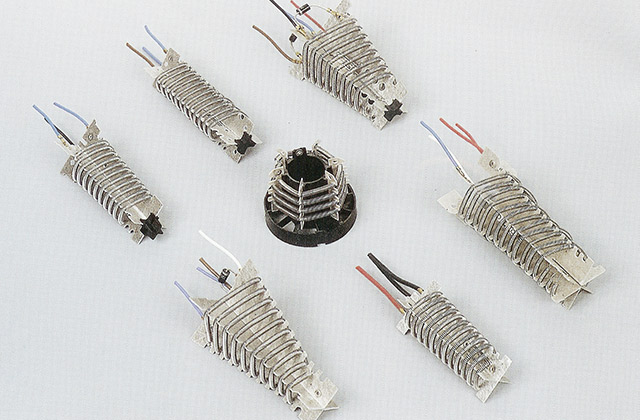
- Forming the electric heating wire into a spiral (rather than a straight wire) has the following key advantages:
-
• Increases resistance: The effective length is increased within a limited space. According to the resistance law, the desired resistance can be obtained to match the rated voltage and power.
-
• Reduces heat dissipation area: The spiral structure lowers the heat dissipation rate per unit surface area, which helps rapidly reach the working temperature (such as above 1000°C).
-
• Saves space: The compact layout is convenient for integration into furnaces, ovens, and other limited spaces.
-
• Enhances mechanical stability: The spiral structure is more resistant to vibration and thermal stress than a straight wire, extending its lifespan.
Electric Heating Tubes & Other Components
- We can provide several different types of electric heating elements, each with its unique functions and applications.
-
• Nichrome heating elements: Nichrome is an alloy commonly used in heating elements. It has high resistance to electric current, so it can generate heat when current passes through it. Nichrome heating elements are often used in appliances such as toasters, hair dryers, and electric heaters.
-
• Single-head electric heating tubes (single-end heating rods/cartridge heaters) and ceramic heating elements (MCH ceramic heating plates/ceramic heating tubes) for 3D printing.
-
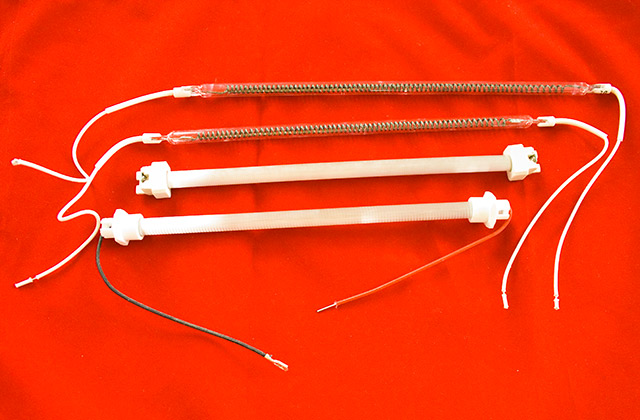
• Quartz heating elements: Quartz heating elements use quartz tubes to generate heat. They are often used in laboratory equipment and industrial processes requiring precise temperature control.
-
• Mica heating elements: Mica heating elements are made from mica sheets wound around a metal core. They are typically used in high-temperature applications such as stoves and ovens.
-
• Tubular heating elements: Tubular heating elements are long cylindrical tubes filled with resistive material inside. They are commonly used in liquid heating systems such as water heaters and boilers.
-
• Ceramic heating elements: Ceramic heating elements are made of ceramic materials that can withstand high temperatures. They are commonly used in small appliances such as curling irons and coffee makers.